
Despite numerous initiatives to reduce the use of plastic bags, their use and popularity are still widespread. The key reasons for the huge consumption of plastic bags are their price and practicality.
The production of plastic bags is an economically profitable process, and the bags are light and resistant. From a small amount of material, a strong and waterproof packaging suitable for carrying is obtained. Although they are an apparently ideal solution, their negative impact on the environment does not start at the stage when the bag becomes waste, but the problems start significantly earlier.
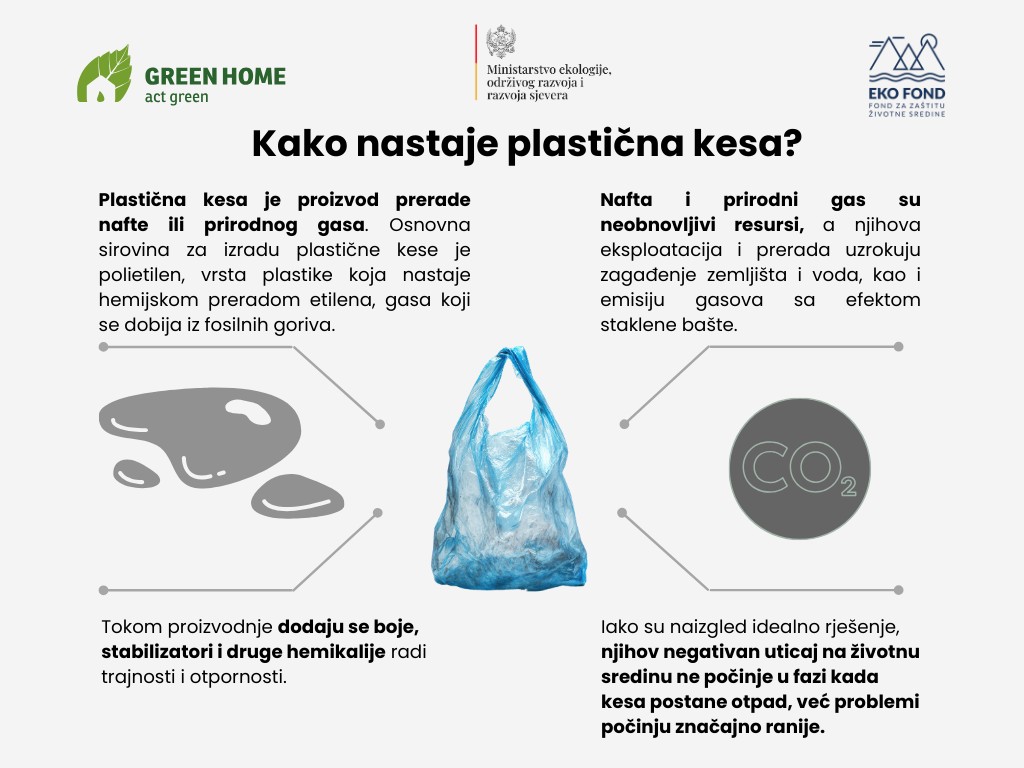
A plastic bag is a product of oil or natural gas processing. The basic raw material for its production is polyethylene, a type of plastic that is produced by the chemical processing of ethylene, a gas obtained from fossil fuels. In other words, every plastic bag has its origin in the exploitation of oil and gas.
Basically, the technological process involves heating oil to separate it into smaller chemical components. From these components, small molecules, such as ethylene, are separated, which are then connected in long chains by chemical reactions in industrial plants. These chains make up polyethylene – the material from which most of the bags we use every day are made. High-density polyethylene (HDPE) bags are most often used in stores, because such a material is stronger and more resistant to tearing.
However, plastic is not the only ingredient in the bag. During production, various chemicals are added to give the bag the desired color, elasticity and resistance. Among them are pigments (colors), antioxidants that slow down the decomposition of plastic, UV stabilizers that protect it from sunlight, as well as agents that enable easier separation and processing of materials.
It is important to emphasize that the raw materials from which bags are made, oil and natural gas, are non-renewable resources. Their exploitation carries significant environmental risks: soil and water pollution during drilling, methane and carbon dioxide emissions, as well as the possibility of oil spills with long-term consequences for ecosystems. The very process of plastic processing and production also involves the use of chemicals and high temperatures, which additionally contributes to the emission of gases with the greenhouse effect.
Although the plastic bag is light and seemingly harmless, the path of its creation (from the oil field to the store) involves intensive industrial processing and the use of resources that have a significant impact on the environment. It is in the production phase that its negative ecological footprint begins, long before its use begins.
The text was created as part of the educational campaign within the project “Truth about plastic bags” implemented by the NGO Green Home, which is supported by the Environmental Protection Fund – Eco Fund.
