
Establishing a Management Authority for Ulcinj Salina a Reason for Satisfaction
Today marks World Wetlands Day, an environmentally and socially significant date of global importance. This year, Montenegro observes this day having resolved one of the key issues for the protection of the Ulcinj Salina—the signing of an agreement to establish a company that will manage this area. The agreement was concluded a few days ago between the Government of Montenegro and the Municipality of Ulcinj.
This obligation had been one of the key obstacles to meeting the final benchmarks for Chapter 27, and it represents an important step toward improving the management of this unique wetland area. By establishing a permanent management authority, an important issue has been resolved, creating the conditions for further implementation of activities that will ultimately contribute to the protection and conservation of species and habitats of the Ulcinj Salina.
This year, the day is marked under the theme: “Celebrating wetlands and traditional knowledge – celebrating cultural heritage,” highlighting the important connection between them. Traditional knowledge and practices of local communities have, for centuries, contributed to the sustainable management of wetlands and the preservation of their biological and cultural value. This represents an invaluable resource for the modern protection and restoration of these ecosystems.
Wetlands are crucial for biodiversity, water regulation, climate change mitigation, water filtration and purification, and they serve as natural systems that contribute to community safety and the preservation of cultural heritage. Traditional knowledge of seasonal cycles, water resources, and the use of natural materials enables a deeper and more comprehensive understanding and management of complex ecosystems such as wetlands—an approach increasingly recognized by science as a valuable complement to conservation efforts.
Montenegro is exceptionally rich in wetland habitats. Among them are Skadar Lake, Ulcinj Salina, and Tivat Salina, all of which are included on the international Ramsar List of Wetlands of International Importance. In addition to these three, there are other significant areas in Montenegro that function as wetlands or have the potential to gain Ramsar status, such as Mareza, Lužnica, Buljarica, Plav Lake, Šas Lake and its surroundings, as well as the Jezerska plateau on Durmitor.
Despite their importance, many of these areas are not adequately managed or protected in line with their value. Negative impacts include improper waste management, untreated wastewater, unplanned construction, water-based activities, unsustainable fishing, and other human activities that threaten the integrity of these ecosystems.
This year, NGO Green Home marked World Wetlands Day through educational activities aimed at the youngest audiences. In the preschool unit “Palčica,” with the support of coordinator Daliborka Suknović, an interactive workshop was held where children, through fun and practical activities, learned about the importance of wetlands and identified wetland areas in Montenegro.
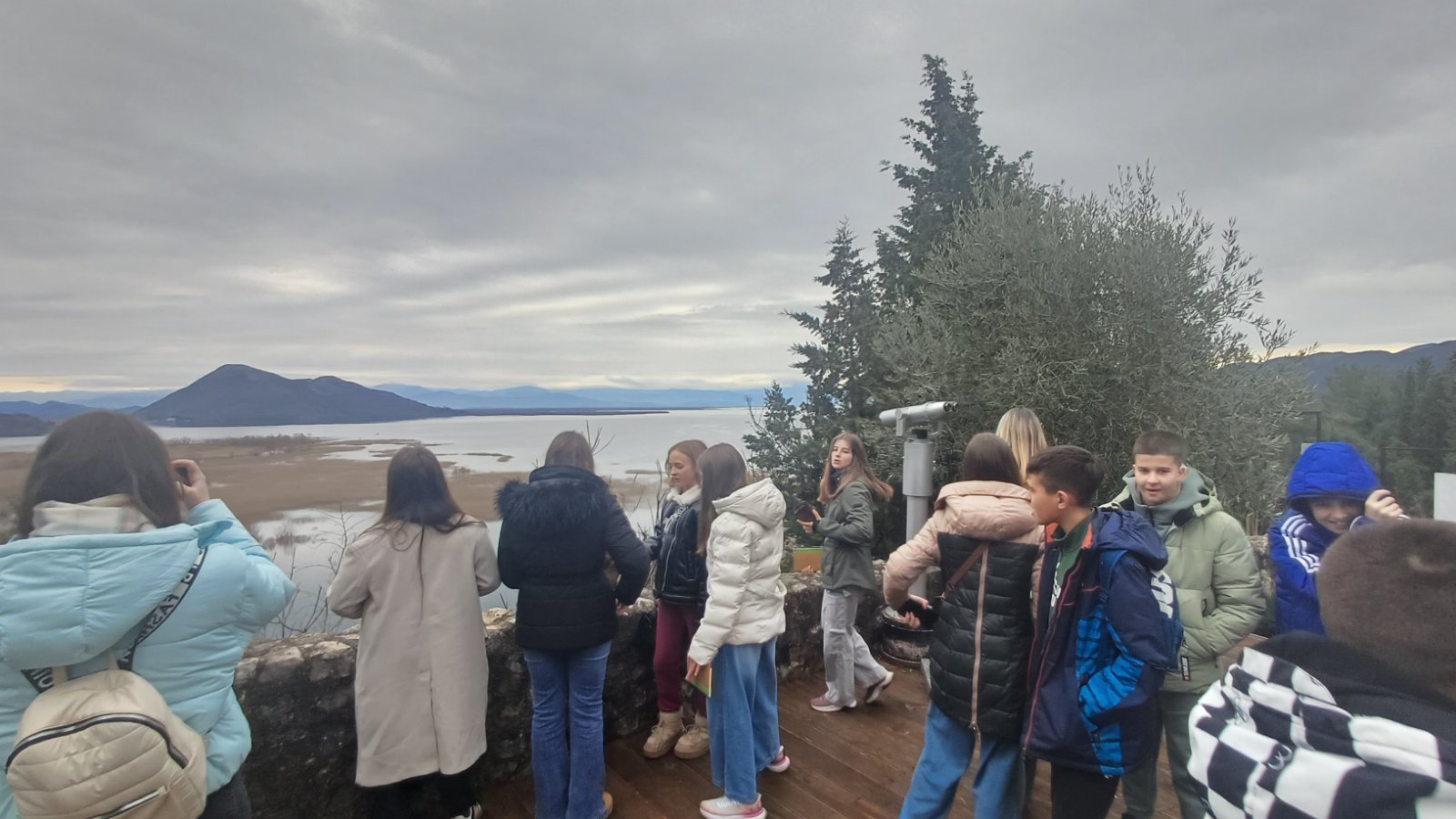
For seventh-grade students of the elementary school “Štampar Makarije,” in cooperation with history and geography teacher Jelena Jovanović and biology teacher and Eco-School coordinator Maja Kalezić, an educational field trip to Skadar Lake was organized. Through direct contact with nature, students learned about the importance of wetlands in the context of climate change, flood protection, and biodiversity conservation, and were able to recognize key elements of wetland ecosystems.
Wetlands are not just a natural resource—they are living systems that connect people, culture, and nature.
