
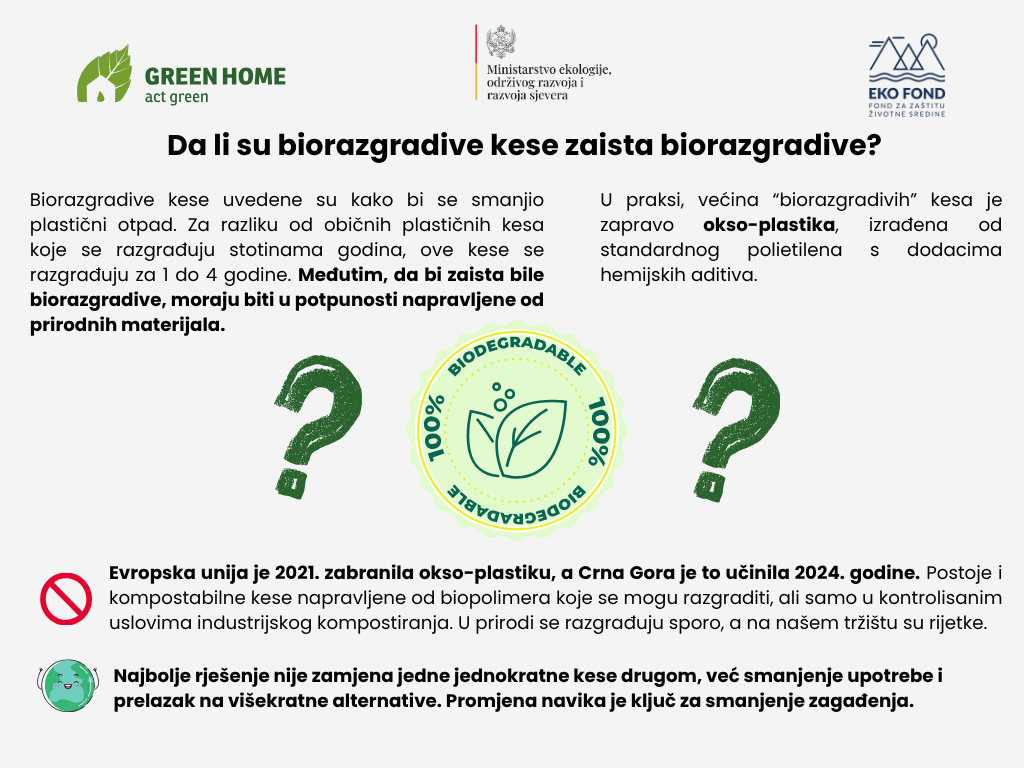
When using plastic bags, it is common among citizens to believe that biodegradable bags are automatically environmentally friendly and safe for human health.
Biodegradable bags were introduced with the aim of reducing waste from plastic bags. While it takes hundreds of years for conventional plastic bags to decompose, biodegradable bags are expected to break down within 1 to 4 years. However, for a bag to be truly biodegradable and break down into non-toxic substances, it would need to be made entirely from natural biomaterials.
In practice, most “biodegradable” bags are actually oxo-plastics, made from standard polyethylene with added chemical additives such as iron or manganese, which accelerate degradation under the influence of oxygen and UV radiation. These bags do not fully decompose; instead, they fragment into microplastics, while toxic additives remain in the environment. For this reason, oxo-plastics are not considered truly biodegradable plastics.
Due to these concerns, the European Union banned the use of oxo-plastics in 2021, and Montenegro, through its new Waste Management Law adopted in 2024, has also prohibited their sale.
Another type of biodegradable bag is compostable plastic bags, which are made from biopolymers such as PLA (polylactic acid) or mixtures of starch and PBAT (a biodegradable synthetic polymer). These materials meet industrial composting standards, meaning they can indeed break down into non-toxic components in compost. However, this process must take place under strictly controlled conditions in specialized composting facilities. Under natural conditions, their decomposition is slow and uncertain. In Montenegro, such bags are almost not available on the market.
There are also paper bags that are considered biodegradable and decompose faster in natural conditions than plastic. However, thicker or coated paper bags can remain in the environment for hundreds of years. The production of paper bags also requires significant resources and chemicals, which puts additional pressure on the environment.
Sustainable solutions are not about replacing one type of single-use packaging with another, but about reducing consumption and switching to reusable alternatives. Societal change in this direction is key to truly reducing plastic pollution and protecting the environment.
The text was created as part of an educational campaign within the project “The Truth About Plastic Bags,” implemented by the NGO Green Home and supported by the Environmental Protection Fund – Eco Fund.
